
How to reduce ACoS on Amazon without losing sales
Lower your Amazon ACoS with 9 practical fixes: set a target from your margins, cut wasted search terms, fix bids and placements, and improve the listing itself.

Amazon Ads can grow a marketplace business fast, or quietly eat its profit. The number most sellers watch is ACoS, and the most common question we get is "how do I bring it down?"
The honest answer: lowering ACoS is easy. Turn off every campaign except your best one and your ACoS will look great, but your sales will drop too. The real goal is to cut wasted spend while keeping profitable sales. This guide shows how.
What is ACoS?
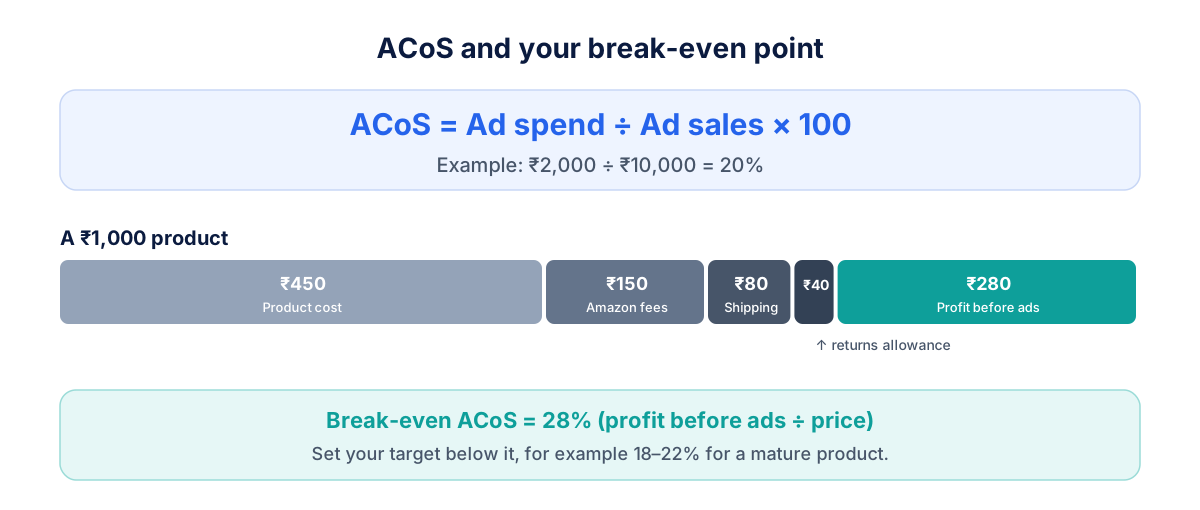
ACoS (Advertising Cost of Sales) is how much you spend on ads for each rupee of sales those ads bring in:
ACoS = ad spend ÷ ad sales × 100
If you spend ₹2,000 on ads and they generate ₹10,000 in sales, your ACoS is 20%. Lower is cheaper, but only up to a point: an ACoS of 5% might mean you're under-investing and missing sales your competitors are taking.
Two related numbers matter too:
ROAS (return on ad spend) is the inverse: ad sales ÷ ad spend. A 20% ACoS equals a 5× ROAS.
TACoS (total ACoS) is ad spend ÷ total sales, including organic. It shows whether ads are building your overall business or just buying the same sales you'd get anyway.
First, set your target ACoS
There's no universal "good ACoS". It depends on your margin. Start with your break-even ACoS: your profit margin before ad costs, as a percentage of the selling price.
Example for a product selling at ₹1,000:
product cost: ₹450
Amazon referral and closing fees: ₹150
shipping and packaging: ₹80
returns allowance: ₹40
profit before ads: ₹280, which is a 28% margin
At 28% ACoS you break even on ad sales. Above it, every ad sale loses money. Your target ACoS sits below break-even, perhaps 18–22% for a mature product. For a new launch you might accept something closer to break-even to build sales history and reviews.
Check your real fees in Seller Central, since they vary by category and price band.
9 ways to reduce ACoS
1. Cut search terms that spend without selling
Download the search term report from your Sponsored Products campaigns. Sort by spend and find terms with clicks but no orders. Add the irrelevant ones as negative keywords (negative exact or negative phrase). This is usually the fastest, biggest saving, because broad and auto campaigns match many searches that will never buy your product.
2. Move winners into exact-match campaigns
When a search term converts well in an auto or broad campaign, add it as an exact-match keyword in a manual campaign, where you control its bid. Then add it as a negative in the original campaign so the two don't compete for the same click.
3. Bid by data, not by hope
Raise bids on keywords with ACoS well below target, since they can take more traffic profitably. Lower bids on those above target. Change bids in small steps, 10–20% at a time, and give each change a week or two before judging.
4. Check placement performance
Amazon shows your ads at the top of search, on the rest of the search page and on product pages. These placements often perform very differently. Use the placement report and adjust the bid adjustments by placement to favour what converts.
5. Fix the listing before buying more clicks
Ads bring the buyer to your page; the page makes the sale. If your conversion rate is low, more ad spend only raises ACoS. Check:
main image: clean, clear, fills the frame
title: includes what buyers search, in plain words
price: competitive against the products shown next to yours
reviews and rating: a product under about 4 stars struggles to convert
A+ content: answers the questions that cause hesitation
6. Stop advertising products that can't win
Some products just don't sell profitably through ads. Their price is too high for the category, or their margin is too thin to absorb any ad cost. Pause them or fix the economics first.
7. Keep products in stock and Buy Box eligible
Ads stop delivering, or waste clicks, when a product is out of stock or you've lost the Buy Box. Watch inventory on advertised products closely.
8. Match your budget to buying hours
If your sales come mostly at certain times of day, use campaign scheduling or budget rules to spend more then and less in low-converting hours.
9. Structure campaigns so you can read them
One giant campaign with every product and keyword hides what's working. Group campaigns by product line or margin band, and keep auto, broad, phrase and exact targeting separate. A clean structure makes every other optimisation faster.
A weekly ACoS routine
Download search term reports and add negatives
Graduate converting terms into exact match
Adjust bids on keywords above or below target
Check placement and product-level ACoS
Pause products that stay above break-even after fixes
Check TACoS: is total sales growth keeping pace with ad spend?
When to get help
Amazon Ads rewards steady, weekly attention, which is hard to give when you're also managing stock, suppliers and other marketplaces. As an Amazon Ads partner, our team manages Amazon campaigns against a target ACoS agreed from your real margins. See Amazon account management, or read how to run your store and marketplaces as one business.
FAQ
What is a good ACoS on Amazon India? It depends on your margin. Calculate your break-even ACoS, your profit margin before ads, and aim below it. For many products that's somewhere in the 15–30% range, but your own numbers decide.
Why is my ACoS so high? Usually because of wasted spend on irrelevant search terms, bids that are too high, or a listing that doesn't convert. Check the search term report first.
Is it better to look at ACoS or TACoS? Both. ACoS tells you if campaigns are efficient. TACoS tells you whether ads are growing your total business.
How long does it take to bring ACoS down? Cutting wasted search terms shows results within days. Bid and listing improvements usually take two to six weeks to show clearly.
More on Growth & Marketing

How to increase sales on Meesho: 12 steps that work in 2026
A practical 12-step plan to get more Meesho orders: better catalogs, smarter pricing, profitable ads, faster dispatch and fewer returns.
Choosing between B2B lead generation channels
LinkedIn, outbound, search or account-based marketing? Start from your deal size and sales cycle, not from the channel.

Running your store and marketplaces as one business
How to sell on Amazon, Flipkart, Meesho and your own store without stock-outs, price clashes or reports nobody trusts.