
How to increase sales on Meesho: 12 steps that work in 2026
A practical 12-step plan to get more Meesho orders: better catalogs, smarter pricing, profitable ads, faster dispatch and fewer returns.

Meesho buyers are price-conscious, mobile-first and mostly outside the big metros. That changes what works. A catalog that sells on Amazon can sit untouched on Meesho, and a cheap listing with poor photos can get orders and then lose them all to returns.
The sellers who grow on Meesho do a few unglamorous things well, every week. This guide covers the 12 steps that matter most, in the order we would tackle them for a new or stuck account.
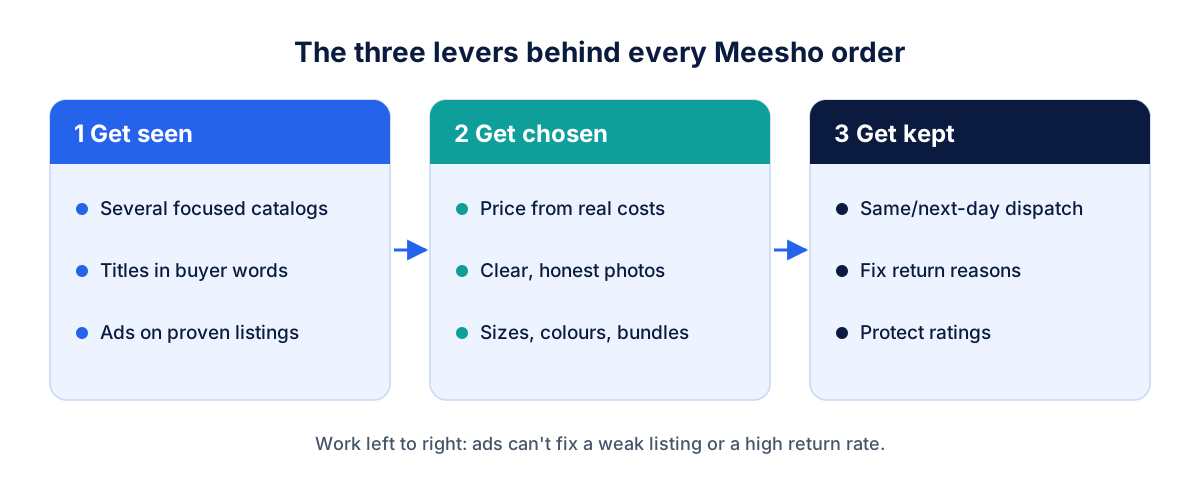
The three levers behind every Meesho order
Every Meesho sale depends on three things happening in a row:
Get seen. Your product shows up when a buyer searches or scrolls a category.
Get chosen. Your price, photos and ratings beat the five similar listings next to it.
Get kept. The order ships fast, arrives as shown, and isn't returned.
Most sellers only work on the first lever, usually with ads. Ads can't fix a weak listing or a high return rate; they just make you pay for the problem. Work through the steps below in order.
Get seen
1. Upload enough catalogs to be found
A single catalog with three designs gives Meesho's algorithm almost nothing to test. New sellers do better uploading several catalogs in their first weeks, each a coherent set of related designs. More catalogs mean more chances to appear in different searches and categories, and they show you quickly which designs buyers click.
Keep each catalog tight: one product type, one price band, consistent photos. A mixed catalog confuses both buyers and the algorithm.
2. Write titles buyers actually search
Meesho buyers search in simple words: "cotton kurti for women", "kids party frock", "steel water bottle 1 litre". Put the product type, the key material or feature, and who it's for at the start of the title. Leave out brand claims and filler like "best quality" or "trending".
Check what Meesho's own search bar suggests as you type your product name. Those suggestions are a free list of real buyer phrases.
3. Use Meesho Ads only on proven listings
Meesho Ads can multiply orders, but only for listings that already convert. Before you spend on a product, it should have good photos, a competitive price and some organic orders and ratings.
Work out your break-even ROAS first: the revenue each rupee of ad spend must bring back for you to not lose money. If your margin after all costs is 25% of the selling price, you need at least 4 rupees of sales per rupee of ads (1 / 0.25 = 4). Anything below that loses money on every ad sale.
Start with a small daily budget on your two or three best sellers, check results weekly, and pause anything running below break-even.
Get chosen
4. Price from your real costs, not your competitor's
Undercutting the cheapest listing is how many Meesho sellers end up busy and broke. Build your price from the bottom up:
product cost
packaging
shipping charges you bear
an allowance for returns and RTO (orders that come back undelivered)
ad spend per order
the profit you want
Then compare with similar listings. If you can't match the market price and still make money, change the product, the pack size or the supplier rather than selling at a loss.
5. Show the product the way a buyer checks it
Meesho buyers decide from photos on a phone screen. Use a clean, well-lit first image with the product filling the frame. Then add the angles a buyer would check in person: back, fabric close-up, size against something familiar, and the product being worn or used.
Avoid heavy filters. If the parcel looks different from the photo, it comes back.
6. Offer the sizes and colours people ask for
A design that sells in one colour often sells better as a set of three. Add variants for your best sellers, especially sizes for clothing and footwear. Check your returns reasons too: "size issue" returns usually mean you need a clearer size chart, not fewer sizes.
7. Bundle to raise order value
Low-priced items carry the same shipping and handling cost as expensive ones. Packs and combos ("set of 3 cotton dupattas", "kitchen towel pack of 6") raise the order value, improve your margin per parcel and often stand out from single-piece listings.
Get kept
8. Dispatch fast, every day
Dispatch speed affects how Meesho ranks your listings and how many orders get cancelled before they ship. Pack and hand over orders the same or next day, and set a daily cut-off time your team never misses. Fast dispatch also cuts RTO, because buyers are less likely to refuse a parcel that arrives while they still want it.
9. Attack your return rate
Returns are the biggest hidden cost on Meesho. Open your returns and RTO reports every week and sort by reason:
"Different from image" or "quality issue": fix the photos or the product.
"Size issue": fix the size chart and add measurements in centimetres.
"Customer not available" or "refused": these are RTO; faster dispatch and accurate addresses help.
Remove or fix any listing whose return rate is well above your account average. One bad product can wipe out the profit from ten good ones.
10. Protect your ratings and supplier quality
Good ratings make buyers choose you; poor ones push your listings down. Pack products neatly, add a thank-you card that asks for a rating, and never ship a product you wouldn't keep yourself. Watch your account health metrics in the supplier panel and act on any warning straight away.
Grow steadily
11. Keep best sellers in stock
A listing that goes out of stock loses the ranking it took weeks to build. Track how many days of stock you have left for your top 20 products and reorder before you hit a week.
12. Plan around sale events
Meesho runs big sale events around festivals such as Diwali. Prepare a few weeks ahead: stock up on best sellers, refresh photos, and decide which products you'll discount and by how much. After the sale, clear slow-moving stock with small price cuts rather than letting it sit.
A simple weekly routine
Growth on Meesho comes from repetition. Block one hour every week for this checklist:
Review orders, cancellations and returns by product
Fix or remove the worst-performing listing
Check ad ROAS against break-even; pause losers
Upload at least one new catalog
Check stock for the top 20 products
Reply to any customer issue in the supplier panel
When to get help
Running Meesho alongside Amazon, Flipkart and your own store gets heavy fast. If you'd rather spend your time on product and suppliers, our team can run the catalogs, ads, pricing and reporting for you. See Meesho account management, or read how to run your store and marketplaces as one business.
FAQ
Does Meesho charge commission? Meesho has advertised zero commission for sellers, but shipping, returns and penalties still affect your margin. Always check current charges in your Supplier Panel before pricing.
How long does it take to get the first orders on Meesho? It varies by category and price. Sellers who upload several focused catalogs with good photos and competitive prices usually see their first orders much faster than those who list a handful of products.
Are Meesho Ads worth it? Yes, for listings that already sell and earn a margin above your break-even ROAS. On new or weak listings, fix the catalog first.
How do I reduce RTO on Meesho? Dispatch the same or next day, show the product accurately, and keep prices realistic. Most RTO comes from delays and buyers changing their mind.
More on Growth & Marketing

How to reduce ACoS on Amazon without losing sales
Lower your Amazon ACoS with 9 practical fixes: set a target from your margins, cut wasted search terms, fix bids and placements, and improve the listing itself.
Choosing between B2B lead generation channels
LinkedIn, outbound, search or account-based marketing? Start from your deal size and sales cycle, not from the channel.

Running your store and marketplaces as one business
How to sell on Amazon, Flipkart, Meesho and your own store without stock-outs, price clashes or reports nobody trusts.